原始内容
pi-open-tui
A polished TUI for Pi coding agent. Combines the best of pi-haiku, pi-claude-code-tui, and pi-zentui into one cohesive package.
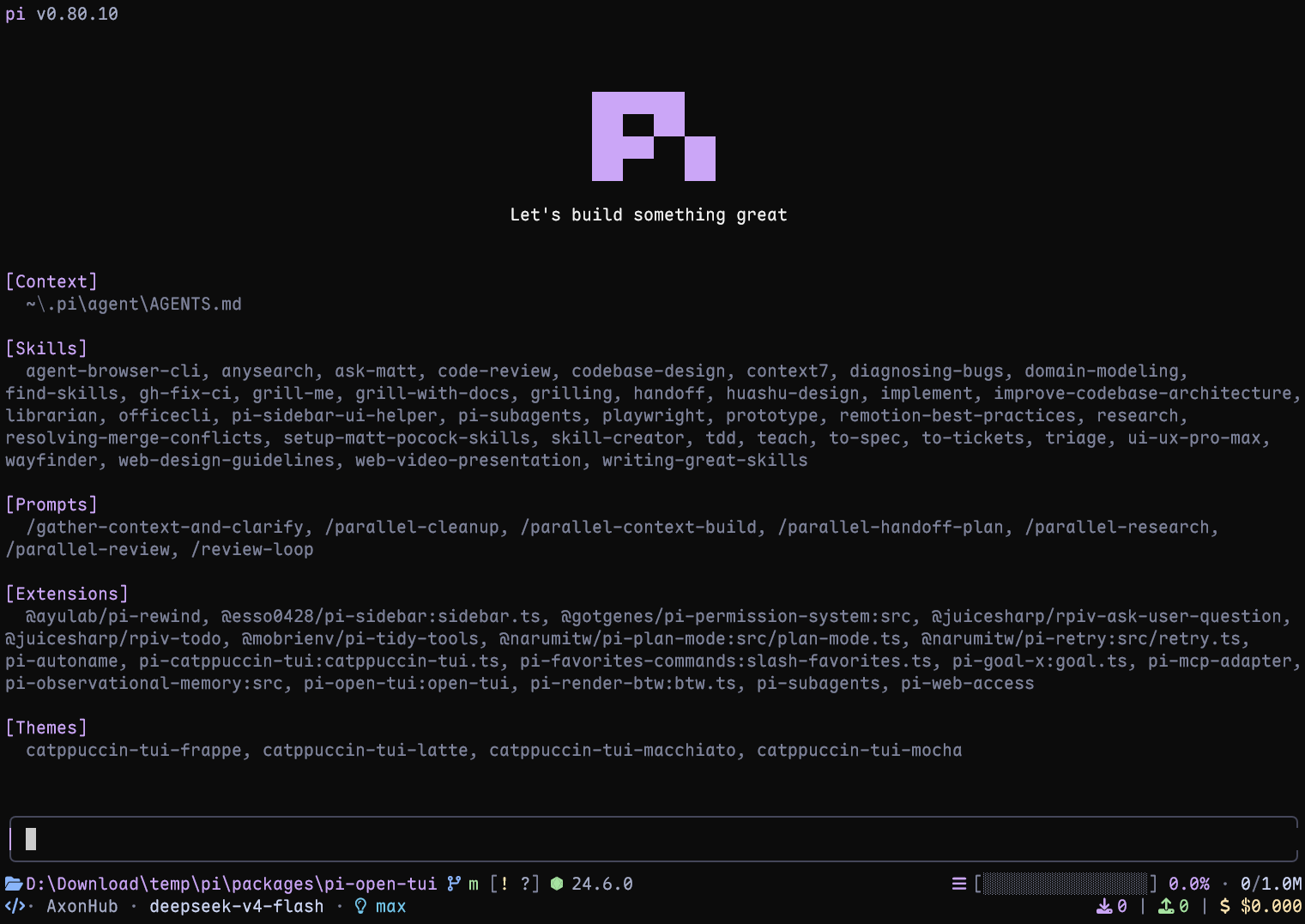
What's in it
- Animated Pi logo header — 16-frame color-changing logo animation + "Let's build something great" tagline
- Starship-style footer — 2 lines showing cwd, git branch/status, runtime version, context bar, model, token counts, and cost
- Rounded editor — accent rail + borderMuted rounded corners, clean visual frame
- 60+ runtime detection — Node, Rust, Go, Python, Ruby, Java, Swift, Kotlin, C/C++, Deno, Bun, and many more
- Git status — branch, ahead/behind, modified/untracked/staged/stashed, detached HEAD commit hash + tag
- Working timer — live elapsed time while the agent is working, done duration when finished
- Zero prototype patches — uses public Pi APIs (setHeader/setFooter/setEditorComponent), safe across Pi updates
- Interactive settings UI —
/open-tuiopens a tabbed settings dialog (Features / Icons / Segments)
Install
pi install npm:pi-open-tui
Or try it for one run:
pi -e npm:pi-open-tui
Configuration
Run /open-tui to open the interactive settings UI. Configuration is stored at ~/.pi/agent/open-tui.json:
{
  "enabled": true,
  "icons": {
    "mode": "auto"
  },
  "footerSegments": {
    "cwd": true,
    "gitBranch": true,
    "gitStatus": true,
    "gitCommit": false,
    "runtime": true,
    "context": true,
    "tokens": true,
    "cost": true
  }
}
icons.mode:auto(detect Nerd Font),nerd(force Nerd Font glyphs), orascii(plain fallbacks)footerSegments.gitCommit: shows short hash + tag on detached HEAD (off by default)
Local development
pi -e .
License
MIT
Acknowledgements
This project builds on the work of several Pi community packages:
- pi-haiku — the 2-line footer structure (location+model · timer+context) and working-timer pattern
- pi-claude-code-tui — the 16-frame animated Pi logo and rounded editor border technique
- pi-zentui — the Starship-style footer segments (git status icons, runtime detection, context gauge), generation-based session lifecycle, and interactive settings UI pattern
The animated logo frames are derived from pi-claude-code-tui, which in turn derive from Pi's official install script (pi.dev/install.sh). The runtime detection list and git porcelain parsing borrow structure from pi-zentui.